

Part 1 of this essay, posed the puzzle why did medieval kings allow their barons to fortify the land? Was this simply a sign of state weakness as historians have alleged? In the second part of this essay, I outline the main argument of my paper with Desiree Desierto about the function of castles in the feudal world.
I opened the previous essay by mentioning the magnificent castles of Northern Wales. But it would be more accurate to anchor our expectations with reference to Mountfitchet castle near Stansted airport.
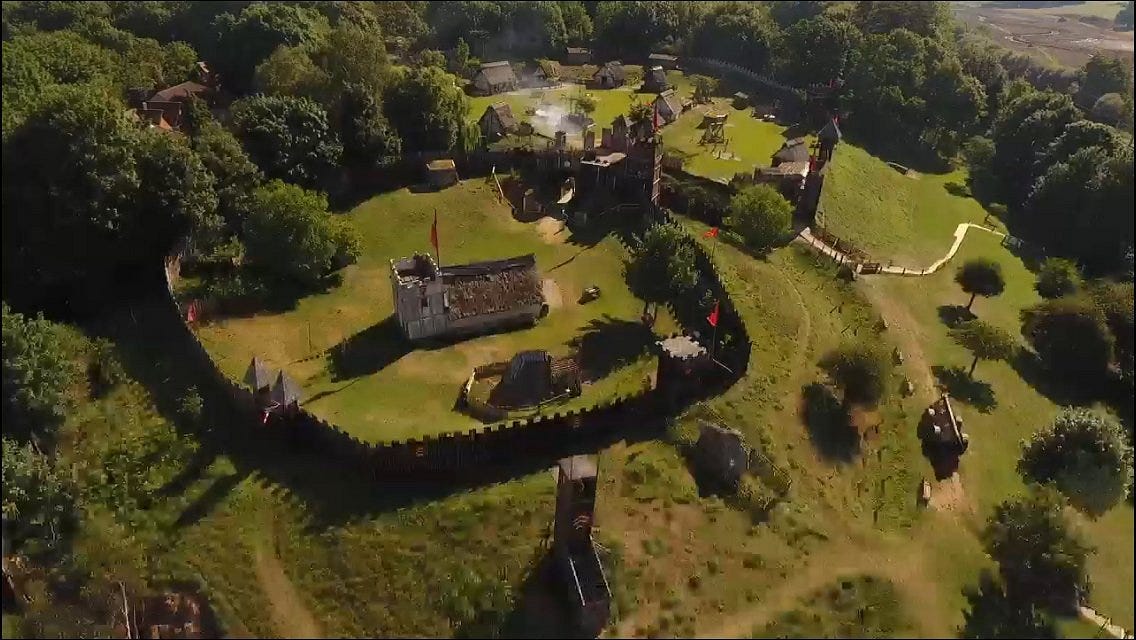
When we describe England as being covered with many hundreds of castles in the early 12th century, the majority of them were more like Mountfitchet than the massive royal fortifications like Caernarfon Castle.
The question, however, remains: Why did strong Anglo-Norman Kings such as William I and Henry I permit their barons to cover the land with their own private fortifications?
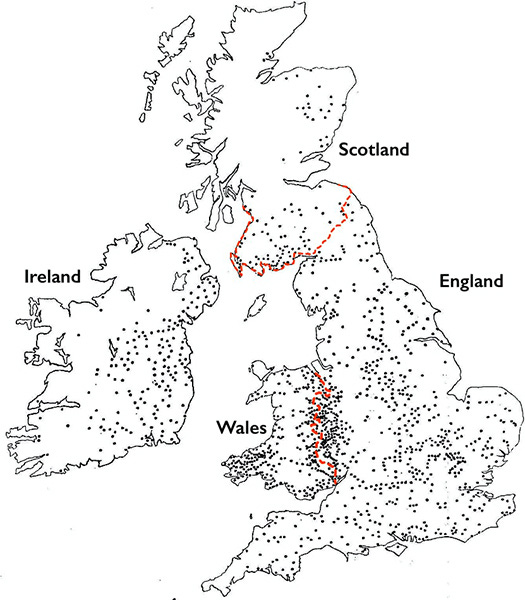
Defense against the native Anglo-Saxons is an obvious answer. No doubt the rapid establishment of motte and bailey castles across England right after 1066 can be explained this way. And the large number of castles along the Welsh marches can be explained by ongoing conflict with the native population. But in general by the 1070s or 1080s there was no serious ongoing internal threat. In any case, with Jacob Hall and Desiree, we tried to see if possible internal and external threats (see the map below) could explain castle location and there is simply no relationship.
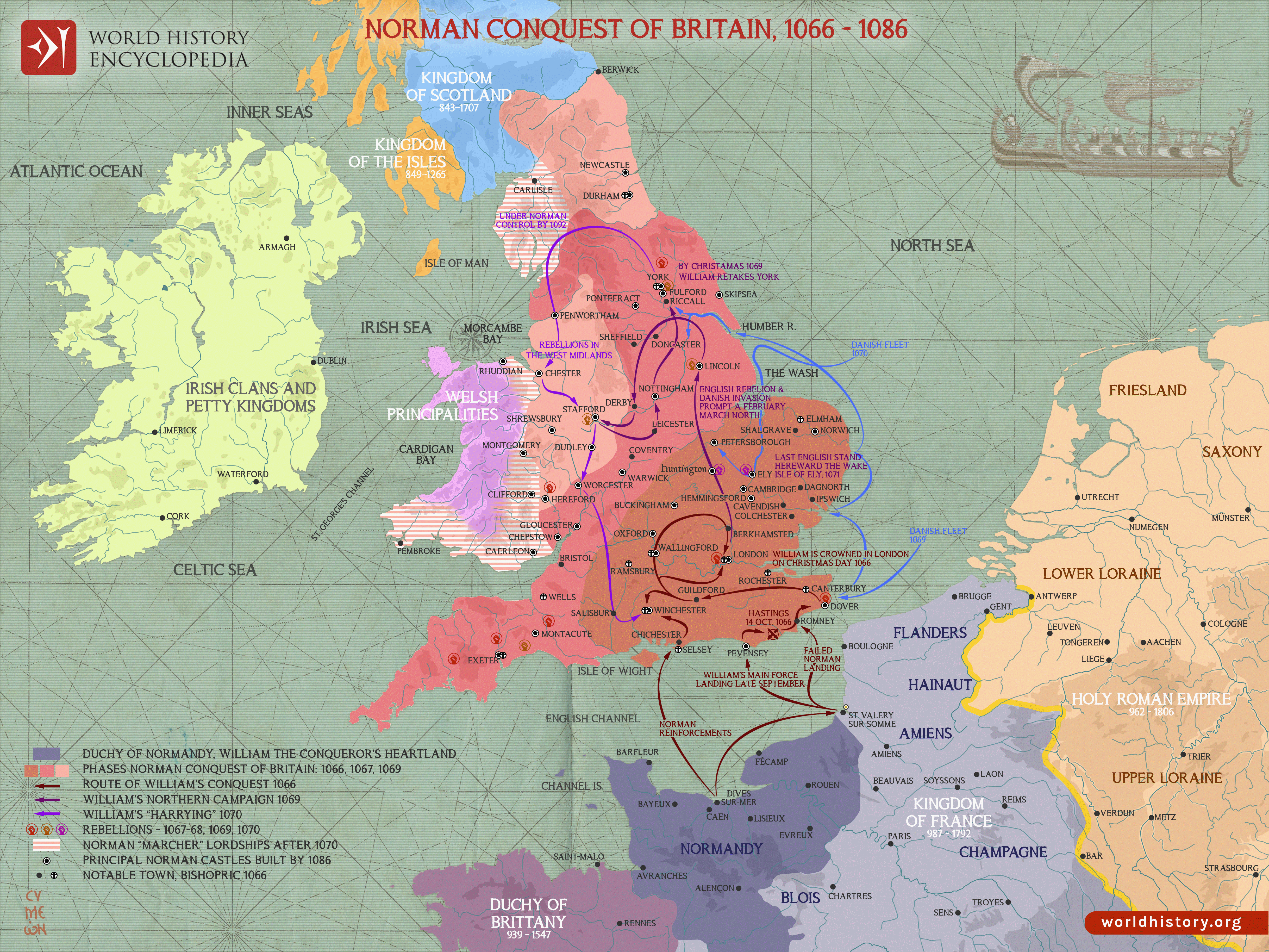
So why did the Norman kings allow their barons to build so many castles? The answer has to do with the coalitional nature of feudal government. Unlike early modern rulers or Tilly-inspired political scientists, they did not view private castles as a measure of state weakness.
Rather, as we document in our paper, baronial castles helped to hold a feudal realm together because they helped make the deals and arrangements between the king and his barons credible.
The Credibility of Feudal Promises
The key idea that we have been working on across several papers is to model the feudal world as a coalitional bargaining game. Simply put, no king rules alone. He needs lords to contribute their military and economic resources to his coalition.
You can think of this coalition as held together by a series of implicit and explicit promises and agreements. Those lords who support him with more resources will expect a greater share of the spoils and rents. But these agreements are non-binding — the king can always renege and take a larger share for himself. Or he can redistribute the lands and castles one lord expected to another lord.
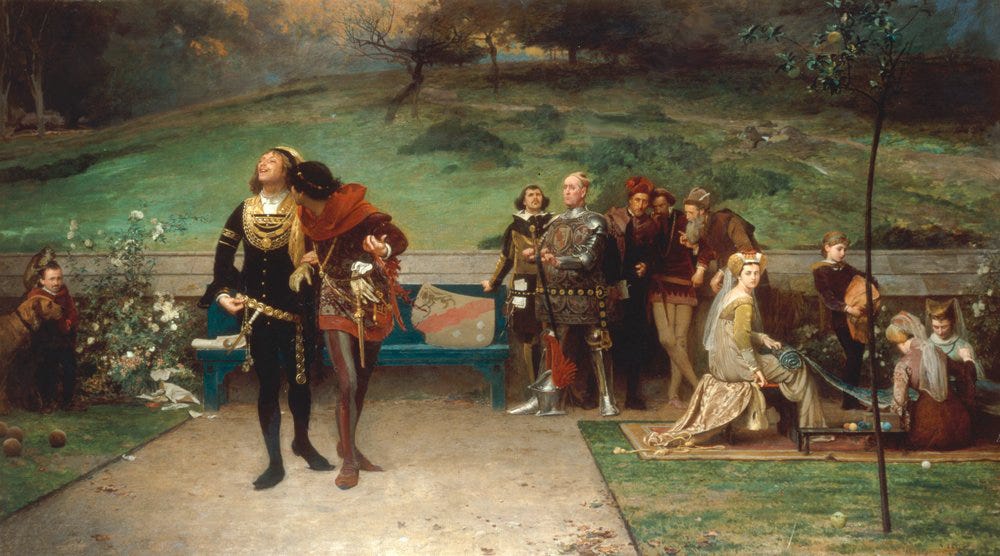
This was one reason why the problem of royal favorites was so acute in the medieval period. Successful medieval kings were able to manage their coalitions of aggressive, aggrandizing, and ambitious barons. Unsuccessful ones like Edward II (r. 1307-1327) failed in this. Edward II’s lavishing of lands and titles on Piers Gaveston at other barons’ expense illustrates exactly the kind of royal reneging that destabilized feudal coalitions.
What helps to keep the king honest? The lord’s castle.
Lords, as we have noted, had their own independent military power. But, it was almost impossible for an individual baron to successfully defeat the king. This only happened when kings alienated their entire baronage (as Edward II eventually did).
It is the existence of private castles that makes it costly for a king to break too many promises to individual barons.
If a baron rebels, he retreats to his castle and takes with him whatever resources he can defend. The baronial castle can eventually be retaken, but it is very costly to do so. Moreover, the castle can allow the baron to raid out and control the nearby countryside.
This is the key mechanism that we formally model: baronial castles raise the cost of reneging for the king, making his promises to the barons more credible. And once this is understood, it becomes clear why rulers like William I and Henry I did not oppose castle-building by their own barons. Baronial castles allow more barons to provide resources to the king, making the realm larger in equilibrium. They make the king more likely to honor his commitments and make his promises more credible, reducing the number of rebellions.
In other words, private castles were not a sign of state weakness. They were the institutional glue that held feudal polities together.
Powerful kings did not monopolize castles
Powerful feudal rulers did not eliminate private castles because to have done so would have been incongruent with other features of feudal rule such as the decentralization of military capacity and the low level of fiscal capacity. Castles were costly to maintain and garrison. No king could aspire to possess all or even a majority of the castles in his realm.
This is evident from the reign of Philip Augustus (r. 1180-1223). Philip was a formidable ruler who greatly expanded both the royal domain and the borders of his kingdom.
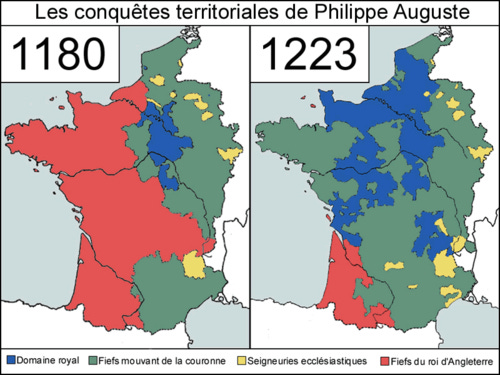
Philip Augustus certainly dispossessed barons who opposed him. But, as his biographer John Baldwin notes, he did this through fundamental feudal methods. He redistributed castles to his followers but he did not dramatically increase the share of castles in royal hands.
Importantly, the doctrine of renderability (discussed in Part 1) meant that he didn’t have to directly control all of the castles in his realm. Moreover, like any feudal ruler he lacked the resources to directly maintain and garrison all the castles in the realm himself.
John Baldwin in his landmark biography of Philip Augustus writes that
“not only did Philip acquire and build fortresses to consolidate the royal domain and his new acquisitions, he also gave them away when it best served his interests” (Baldwin, 1986, 301).
This is clearly not the behavior of an early modern ruler seeking to monopolize all military power in his realm. Philip Augustus was no Louis XIV. When it came to castles, there are numerous instances of him giving away castles such as Montboissier which he gave to the Count of Auvergne in 1189; furthermore:
“In this inaccessible region Bertrand de la Tour received three castles, the bishop of Clermont four, and the bishop of Le Puy five.”
Similarly, when Philip conquered Normandy he granted many castles to his vassals. Powerful English kings like Henry II behaved similarly in this period.
Checking despotic power
Finally, what evidence is there that castles allowed feudal lords to check despotic power?
Here we draw on our paper on Magna Carta, written with Jacob Hall, where we demonstrate that baronial castles played a critical role in the formation of the rebel coalition that was capable of checking King John in 1215 (see my earlier post). You can read about that paper here.
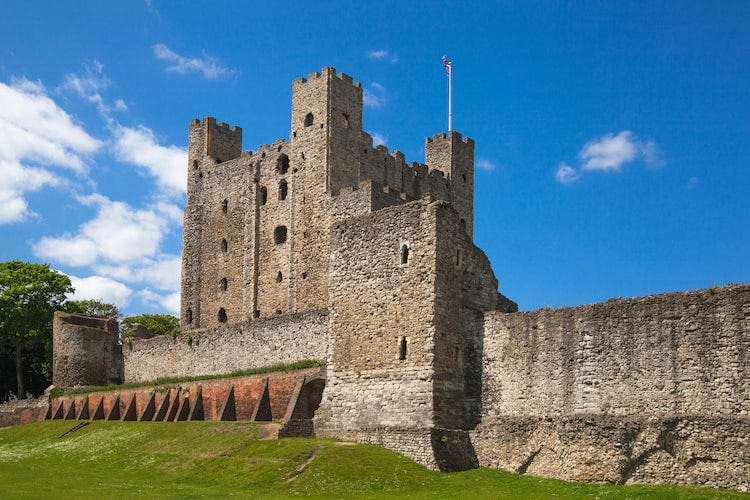
Consistent with this argument, when the Barons’ War did break out following John reneging on Magna Carta, control of key castles played a critical role in the conflict. Baronial control of Rochester Castle delayed John’s army for more than 7 weeks before capitulating.
In future work it would be interesting to see how important castles were in other attempts to impose checks on royal behavior (particularly outside England).
The Bones of the Kingdom
William of Newburgh called castles “the bones of the kingdom” (*regni ossibus*). Our paper explains why. In a world without formal constitutional constraints, without independent courts, without any mechanism to bind the king’s future actions, baronial castles solved the fundamental commitment problem of medieval governance. They made the king’s promises credible by making reneging costly.
In Part 3, I’ll turn to the question of why baronial castles eventually disappeared — and what that tells us about the transition from the feudal world to the early modern state.
The Harrying of the North shows that William the First's alternative to castles was genocide.