

In this series (Part 1 and Part 2), I have argued that medieval Europe was littered with baronial castles in part because they allowed feudal rulers to make credible bargains with their lords. [Everything in these posts and in this post draws on a recently published paper with Desiree Desierto.]
Medieval rulers were therefore quite content to allow their barons to possess powerful and strongly garrisoned castles if those barons were part of their governing coalition. These castles, moreover, were costly for the king to besiege so they made the threat of a rebellion against the king tangible.
Now the question this post addresses is why did this feudal castle equilibrium eventually disappear?
There are essentially two competing explanations:
Rising state capacity and the desire of early modern rulers to monopolize power.
Changing military technology that rendered most baronial castles obsolete.
Of course, these are not mutually exclusive (and were in fact deeply interwoven). But, as I’ll argue below, the evidence is much more consistent with (2) rather than (1).
The Early Modern State-Building Thesis
As discussed in classic works by Otto Hintze, Charles Tilly, and Thomas Ertman more powerful and centralizing states after 1500 after protracted struggleda, disarmed their nobility, imposed a measure of civil peace, and eventually centralized military capacity.
Simplifying things, the Tilly-thesis would suggest that causation ran from the emergence of stronger states after 1500 to the subduing and disarming of the feudal aristocracy and the destruction of their castles.
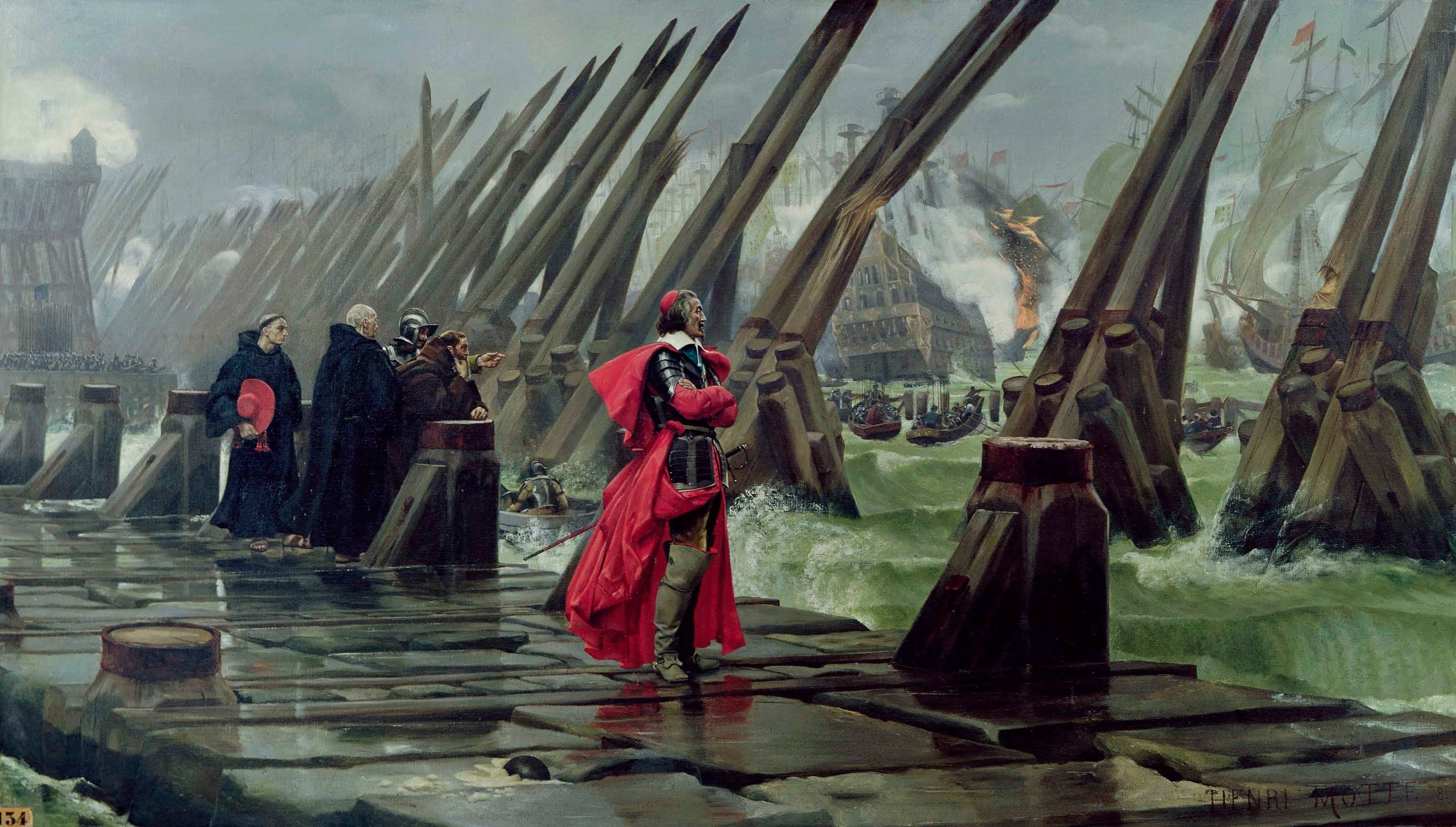
In his biography of Cardinal Richelieu, the American Congressman and historian James Breck Perkins provides an elegant summary of this perspective. Circa 1600, he writes:
“Over all the land, numerous chateaux were scattered. ‘In France there are too many chateaux,’ said an ancient proverb, showing the deep-seated dislike to a powerful nobility that was still fresh at the era of the French Revolution.
Richelieu, however, tore down many of these castles (although probably far fewer than historians used to think). Perkins continues:
“They were the relics of a past age rather than important features of the present age. Richelieu might have allowed them to stand until they fell from decay or were torn down to suit new demands of fashion, without fearing any effective resistance to the royal authority. Still, the destruction of fortresses scattered through the interior of the country marked the close of an era of internal disorder and private warfare. It was an outward sign that the robber-baron and the noble highwayman had ceased to exist”
The image of Richelieu urging the destruction of internal fortifications is captured in an early scene in one of the most disturbing historical films I’ve seen: Ken Russell’s The Devils. The Catholic priest Urbain Grandier made an enemy of Cardinal Richelieu by opposing an edict to take down the city walls.
The Tilly explanation suggests that the timing of these developments should have occurred sometime after 1500 (consistent with the Richelieu example). He wrote:
“In 1500, no full-fledged national state with unquestioned priority over the other governments within its territory existed anywhere in the West. England was probably the closest approximation . . . [But] . . . . It still harbored a number of great lords who controlled their own bands of armed retainers”
But as Perkins recognized, the destruction of castles and city walls in the interior of France was not just driven by the centralizing tendencies of the early modern French state. It was also a reflection of changing military realities such as the rise of gunpowder weapons.
Military Obsolescence
In fact, the timing suggests that most castles had ceased to be military relevant before early modern states became powerful enough to fully suppress their independent nobility. That is, the disappearance of feudal castles wasn’t caused by the rise of the state. Rather, the rise of the state was made possible by the decline in feudal castles.
Certainly, this seems to be the case in late medieval England.
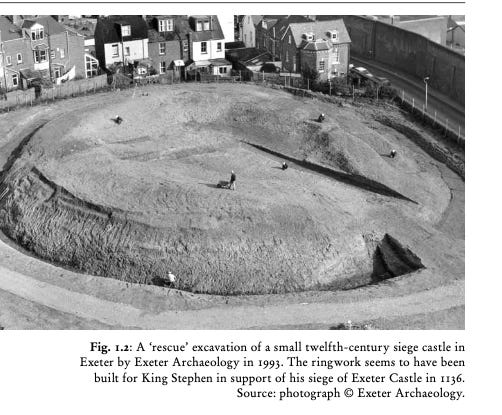
The civil wars of the 12th and 13th centuries had been castle wars. During the civil war between Stephen and Matilda known as the Anarchy, pitched battles were a rarity. So common were sieges, that a phenomenon known as the “siege castle” emerged: castles that were built just to besiege other castles.
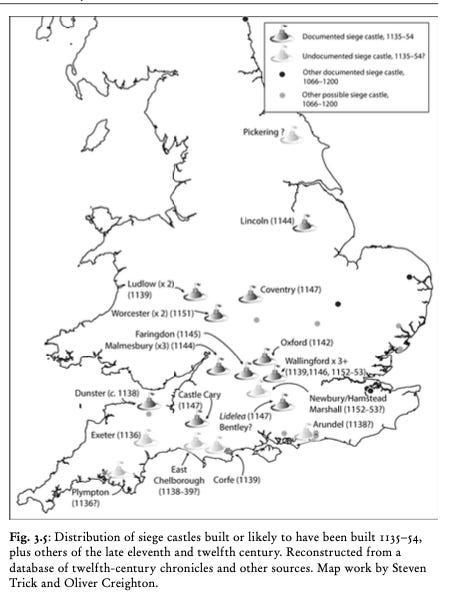
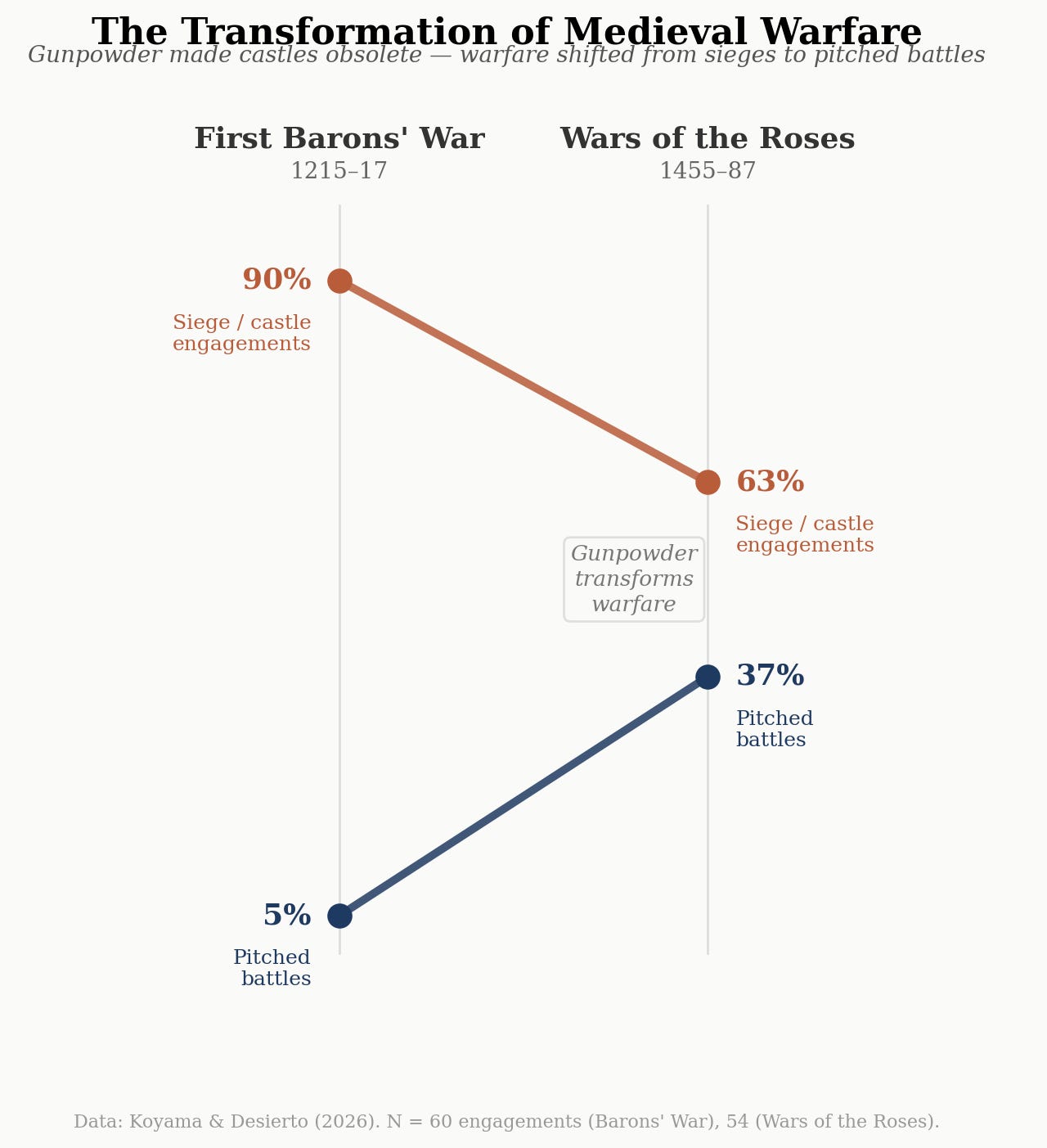
We haven’t yet run the numbers (or found good enough data) to compare the ratio of sieges to pitched battles during the Anarchy. But it is clear that former predominated. We have done this analysis for the 1st Barons’ War, however and the numbers are stark: 90% of engagements were either categorized as sieges or castle events.
In contrast, following the development of gunpowder weapons and specifically iron cannonballs, the high walls of medieval castles became extremely vulnerable. The rapid French reconquest of Normandy and Gascony in the 1440s were made possible by the development of a formidable royal artillery train. Similarly, even the previously impregnable Theodosian Walls of Constantinople quite rapidly became vulnerable.1
Warfare rapidly evolved. Sieges were still common but the ratio of sieges to pitched battles fell dramatically. This was because towns and castles that previously had a good chance of resisting a siege now surrendered. In our paper, we document this with data we collected on all the battles and sieges in the Wars of the Roses (1455-1487). While a majority of encounters were still sieges, the proportion of pitched battles dramatically increased.
When Henry Tudor invaded in 1485 he was able to bypass the major castles of the kingdom and force Richard III to fight a risky, and as it turned out, decisive battle at Bosworth Field.
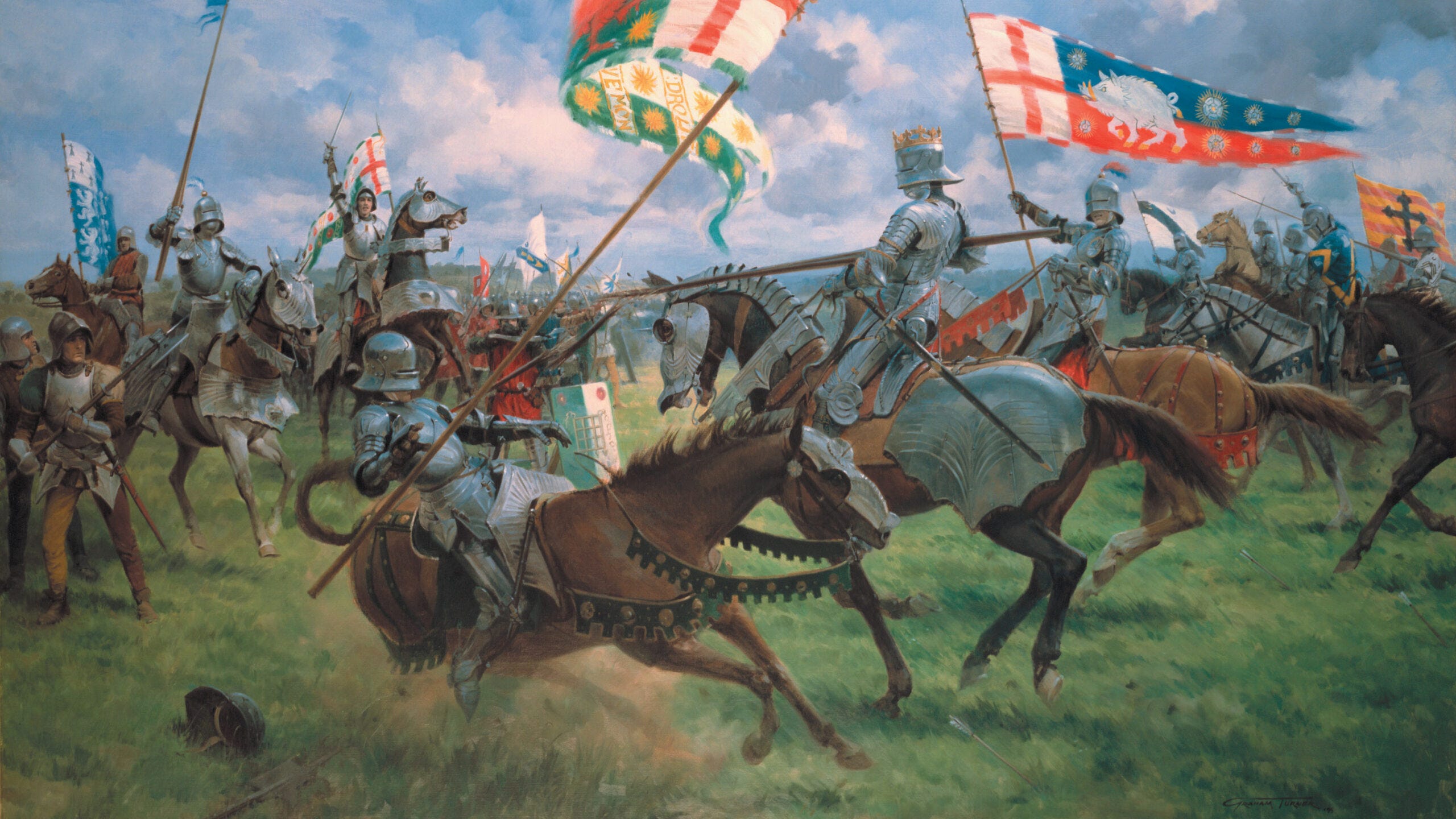
By the late 15th century, castles were no longer the “bones of the kingdom”. As predicted by our theory, this made England militarily and politically unstable.2 The norms that had previously governed feudal rebellion had disappeared. Whole bloodlines of the English aristocracy wiped themselves out. As Henry VII, Henry Tudor worked hard to reduce the remaining military power of the feudal aristocracy. Sir William Stanley - the man whose change of sides during the battle had been decisive for Henry’s victory - was nonetheless, executed for plotting against the king in 1495.
There are nuances, of course. Into Elizabeth’s reign, the royal government kept track of which castles were in good repair and in royal hands and during the English Civil War, many medieval castles proved useful as bases of operations or even as fortifications. Nonetheless, we argue it was changing military technologies that led to the end of the feudal equilibrium and the rise of the more powerful states largely post-dates this.
As we discuss in the paper, already by the early 16th century new types of fortifications were emerging to deal with the threat posed by cannon. These trace italienne fortifications were immensely expensive, however, and required far larger garrisons. As a result, they were built by the new fiscal states such as France after 1600, and they tended to be built on the borders of the consolidating territorial states rather than in the interior.
Although when researching this article, I discovered that the success of the siege did not hinge on the use of cannons as I previously believed.
This is not to discount other factors such as Henry VI’s failure as ruler, of course.